Showing posts with label Throwback Thursday: Josephine’s Book Edition. Show all posts

Throwback Thursday: Josephine's Book Edition


Angela Carter’s books have been around forever, but I hadn’t heard of her at all until a few years ago, when my Mum bought me her Book of Fairytales for Christmas. 
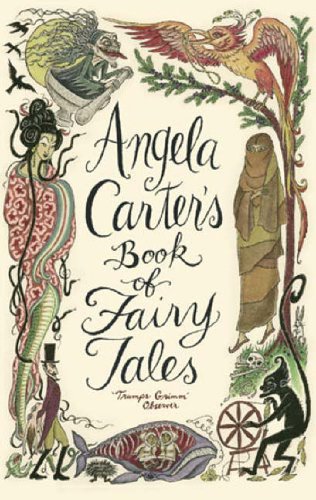
I’m still not sure what prompted that book choice, whether it’s the fact that it’s stunningly pretty, or whether she liked it herself or whether she just saw it and thought of me. Probably a combination of the three. I have always loved a pretty book and a fairytale. Anyway, I got it that Christmas and I loved it (if you’re not familiar with that book then you should fix that problem) and I went out and bought myself some more of Carter’s work, specifically The Bloody Chamber, Wise Children and Nights at the Circus. They’re all the Vintage copies, so it must’ve been at that Red Spine loving time. I have about ten of those I think, Grimms' Fairy Tales being one of them.

I hadn’t thought much about her for a while but I was down visiting pals last weekend and my friend Mark had left the Penguin Deluxe edition of The Bloody Chamber in his kitchen. I was drawn in by the pretty and thought ‘oh, I know this book,’ found myself flicking straight to The Courtship of Mr Lyon and thought, ‘yep, actually, I do, I love this book.’

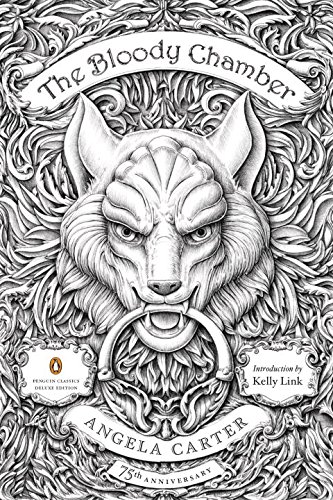
& I know I have a copy already, but these Penguin Deluxe copies, they’re like witchcraft, you touch them and you have to have them and I got straight on the internets and ordered me a copy. Honestly, there’s really not much you can say to me about how unnecessary it is because look at me, I have the Harry Potter series twice and the number of copies of Alice I have goes into double figures. & this book is pretty, the cover is lush and the pages are all uneven and wonderful and it’s just beautiful.
Then Jen made this video and did some Twitter asking about favourite fairytales and thus, this particular Throwback Thursday had its theme.


It’s an awesome book and with the current trend for twisted fairy stories, I can't help wonder if Angela Carter – who would have been 75 this year - was one of the first to re-imagine fairytales like this? Jen will tell me, Jen knows – right Jen?

Most of the stories in this collection are familiar, some only if you squint, but all of them are dark and edgy like a good fairytale should be.

We’ve got stories based on Beauty and the Beast and Puss in Boots and Little Red Riding Hood, and the terrifically gruesome The Snow Child which I guess you can maybe say was inspired by Snow White although, it is in no way the same story: I told you, sometimes you have to squint, and Jesus God you’ll never see this story Disney-fied. Skin as white as snow is pretty much where the similarities end I think.

Carter takes what you thought you knew about stories you grew up with and turns them on their head. Here be no damsels in distress, no princesses needing saving because Carter is Queen of the kickass female protagonist. Is this ‘feminist literature’ then? You know what, yeah, it probably is. All of Carter’s women are strong and liberated and somehow the dark and gothic settings make that all the more apparent – she tackles sexuality and sex, stereotypes, coming of age, identity and balance of power and she does it so freaking well. Probably they’ll blow your mind a little bit.

My personal faves? The Courtship of Mr. Lyon because I always love me a good Beauty and the Beast story (I think maybe the other version in the book The Tiger’s Bride got more acclaim though, certainly it’s darker and the ending has a definite twist), The Company of Wolves where Red Riding Hood is totally in control of how her story goes (she knew she was nobody’s meat) and Wolf-Alice - a girl raised by wolves, rescued by nuns and eventually sent to live with a werewolf, and a story that’s all about independence and self-discovery I think, perhaps more than any of the others. The whole collection is worth a read though and with fairytale re-tellings being A Thing right now, you could do a lot worse than The Bloody Chamber.

Book of the Year 2015 (so far...)


Thursday again. Where do the weeks go? I guess this one seems shorter because I was travelling on Monday. I spent the weekend in Lewes with my pal Emma. There was baking and eating and walking and Netflix and it was generally just a really lovely time. It also means that this week is only a 4 day working week. Hurrah.

This week I’m throwing back Thursday in a different way, because we’re halfway through the year, so I’m going to talk at you about my Top 5 of 2015…so far! This year has been super actually from a bookish point of view, because I’ve read stuff I might not normally have picked up and pretty much all of it has been excellent.
There’s still some crazy exciting looking stuff on my TBR for the back end of the year too so as ever it will be interesting to see how many of these 5 books still make the cut at Christmas.

Naomi Novik’s Uprooted is a book I discovered via Netgalley, and that I was drawn to by the cover. I totally judge books by their covers, I’m not even ashamed to say it. Cover art is so amazing these days, how could you not? Anyway, I read it and loved it and have m own shiny bought-and-paid-for copy on its way to me because as marv as these e-ARCs are, I kind of feel like when I love a book, I ought to show that love by you know, buying it. So I did. Uprooted is amazing. It’s about this little village on the edge of an evil forest. The villagers are protected from the ways of the wicked woods by The Dragon who lives in a tower and who every ten years takes a girl from the forest to live with him as payment for his service. It’s amazing. Did I say that already? Italk about it in more detail here.

I cannot tell you enough times how much I loved The Gracekeepers. I already reviewed it, but, seriously: this book ticked all the boxes for me. It has it all. It’s just incredible and I love it and I wanted to read it forever and I swear to you if you are not reading this book then you are doing life wrong. It’s sort of part fairytale and part dystopia and completely utterly glorious.

Last Night in Montreal is a book I probably wouldn’t have read (yet) because let’s be honest, when you hear Emily St. John Mandel you think Station Eleven. Everybody has been all about Station Eleven for ages and I really really want to read it but I was sent a copy of Last Night in Montreal around about the time of the UK publication earlier this year and figured it was probably polite to read that one first. I’m so glad I did, because eurgh, so good. So very very good. It’s about this girl called Lilia who has spent her entire life leaving her life and the people in it, behind, never looking back. When she leaves her latest lover, he’s not quite so cool with it, and he follows a trail of breadcrumbs to find her only to discover there’s so much more to Lilias story than he ever thought. It’s so beautifully written and so intricate and there are all these threads to the story that weave together perfectly and it’s just a stunning piece of writing, and I talk more about why I love it so much in this post.

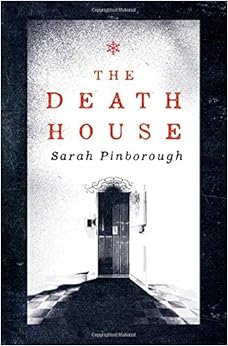
I talk all about Sarah Pinborough’s The DeathHouse here, but I’ll just tell you quickly again now that this book blew me away. It got right under my skin and broke my heart and just made me feel all the things and I absolutely loved it. Loved it.

And finally we come to The Girl WhoCircumnavigated Fairyland in a Ship of Her Own Making which, well, I don’t really know what to say. I’m planning a proper post about the Fairyland books at some point, but basically: every person ever needs to read these books. This is the first in the series and holy smokes it’s been a long time since I fell in blooklove like this. Jen pointed me in their direction, I say pointed; it was more on a very insistent demand that I read them. Which I did, because Jen has yet to rec me a book I didn’t love, and I fell. I’m talking Alice levels of love here, I’m talking his Dark Materials, I’m talking Harry Potter. That’s how much I loved it. It’s amazing.
It’s all about twelve year old September who meets The Green Wind at her window one day and is taken on an adventure to Fairyland. Fairyland is being ruled by the fickle and mean Marquess and only September with her friends, A-through-L, the Wyvery (his Mum is a wyvern; his father is the library) and a wonderful mysterious boy by the name of Saturday, can save it.
The story is clever and moving and funny and playful; the language is all kinds of incredible, smart and pretty and whimsical; the characters are characters you want to put in your pocket and keep there forever( SATURDAY!!!!); and the illustrations, I WANT THEM ON MY WALL. There is so much going on in this world and it feels like a modern day Wonderland. This book, I swear. It’s like if Through the Looking Glass and His Dark Materials had beautiful perfect babies (and then read book 2, read book 2 and we’ll talk about Coraline).  I can’t wait til I have children and I can read them this book. It deserves all the accolades. It deserves to be on every bookshelf ever.  It’s so amazing it makes me want to cry tears of happy.

Throwback Thursday: Josephine's Book Edition


Happy Thursday! This week is a good week because bank holiday. I love a four day week.

It’s all a bit general election everywhere right now isn’t it. I had to hide in my upstairs yesterday in order to avoid the UKIP canvassers on my road. Like I’d open the door to them, never mind give them my vote. However, a political rant this is not, all you probably need to know really is that I do take my right to vote very seriously. I think it matters. & that is that.

Today in honour of the publication of the new Kate Atkinson (I’m so excited. Dance with me?) I am reminiscing about the first of her books I ever read: Not the End of the World. Which, well, it pretty much solidified Kate as one of my faves and guaranteed that I will always buy any book she ever writes ever because she has an amazing brain. This book, I think, is perhaps only beaten by Life After Life at highlighting that fact. Seriously, so damn clever. It’s also probably quite surprising to somebody who comes to Atkinson having only read her Jackson Brodie books, because, well those books are all kinds of fabulous but they are absolute worlds apart from this one. As in, they could have been written by a different person entirely and excuse me whilst I fangirl a little but that versatility is what makes Kate Atkinson so damn good.

Not the End of the World is a short story collection, where each story stands alone but is also somehow linked to another, wherein myth and reality make for strange partners and the lines are delightfully blurred. It’s so good. So very good. It’s kind of like you get hit with this lightbulb moment part way through, where you’re reading away, and just loving the whole thing and then you think ‘woah, hang on just a minute’ as you realise that there’s this connection between this story and that and it adds this whole new dimension to the whole thing, trying to work out what the connections are and what they mean and how this fact from this story is going to impact your interpretation of another. It’s like reading an awesome crazy collection of stories and simultaneously reading a super cleverly thought out novel. It’s like a puzzle – spotting the links kind of becomes like a game.

The collection starts and ends with a story about two girls – Trudi and Charlene – and even though it’s never explicitly mentioned, the girls are the thread that ties the whole thing together so cleverly. Their world is the one the title refers to I think – Trudi and Charlene’s world is ending, actually, falling apart even as they carry on with a shopping trip and it’s that, the whole ‘lets keep making a shopping list though there’s a boatload of zoo animals roaming the streets’ that kind of makes you realise that something pretty special is going to follow.

It does.

The 11 following stories are equally surreal, and equally random and equally fabulous and all full of clever references to mythology – like the mother who remembers being dragged underwater and raped by Poseidon for example. I know, mental right. It’s like constant nods to the myths you know but holy smokes, not as you know them.  Perhaps you could view it as a study in mythology – like, is there any relevance to all that stuff now, and how does it fit in with the world as we see it

It’s kind of like writing this, Atkinson sort of thought ‘fuck it, I’m not going to stick to writing in the way people expect books to be written, I’m just going to do the thing my own way and people can love it or hate it’; it reads like she had a blast writing it and you know, somehow to step outside of the expected like that feels kind of brave. I like brave. I like the way Kate Atkinson plays with words and themes and concepts. I also really like this book. 

Throwback Thursday: Josephine's Book Edition


Today I wish to talk about My Girl 2, mostly because when I was looking for my Sense and Sensibility DVD last week I came across My Girl and was hit with all the Vada Sultenfuss feels. I loved that film, so hard, even though it broke my tiny little girl heart.

I never saw the second film. I had the book though, because, well, bookworm and I read it so many times.

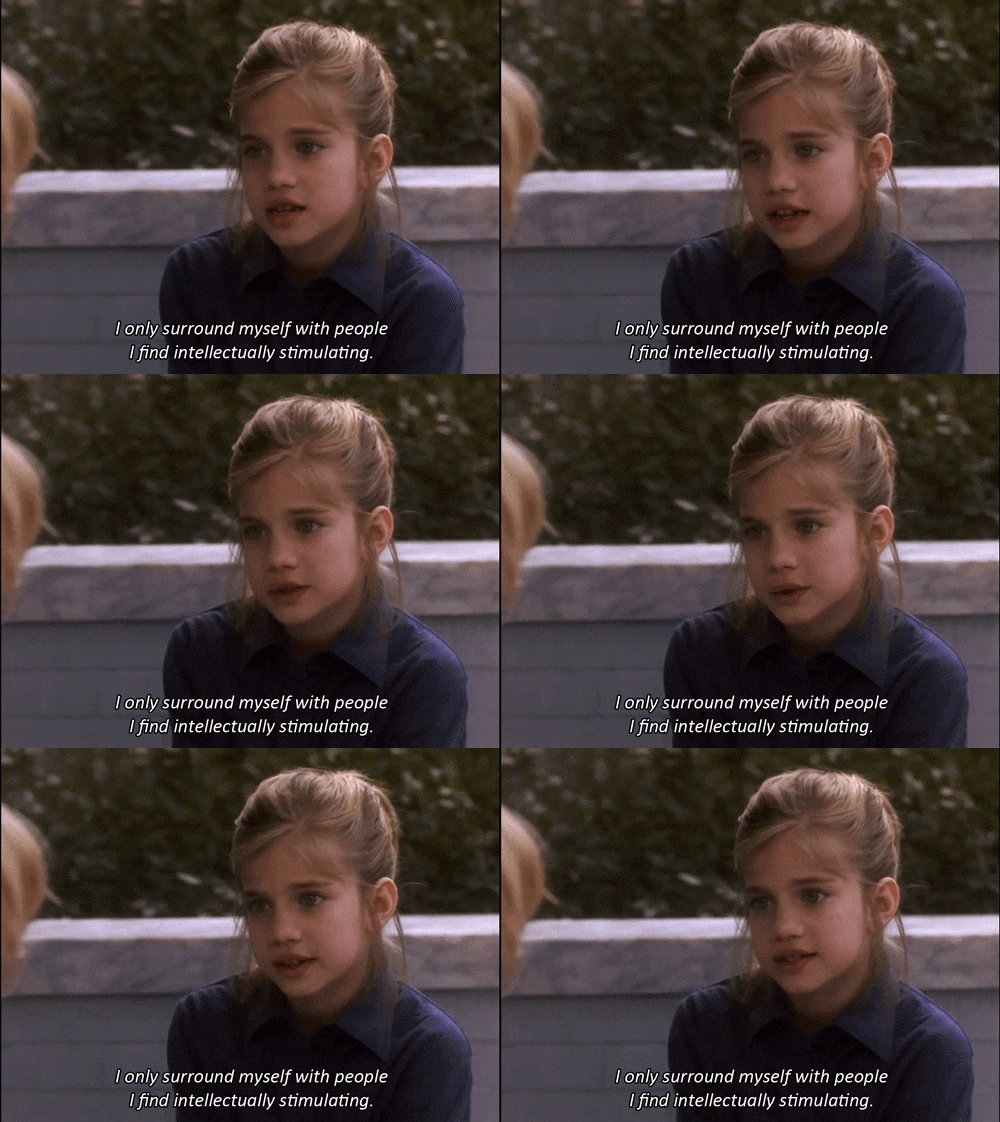
Everyone knows My Girl, right? Vada Sultenfuss is an undertaker’s daughter, her Mum died and her Dad is seeing someone new, she’s a total hypochondriac (growing up in a funeral home would do that to a kid), has a crush on her teacher and is terrified she killed her mother (who actually died in childbirth). She's a really cool kid, our Vada. I loved her, I wanted to be her friend.


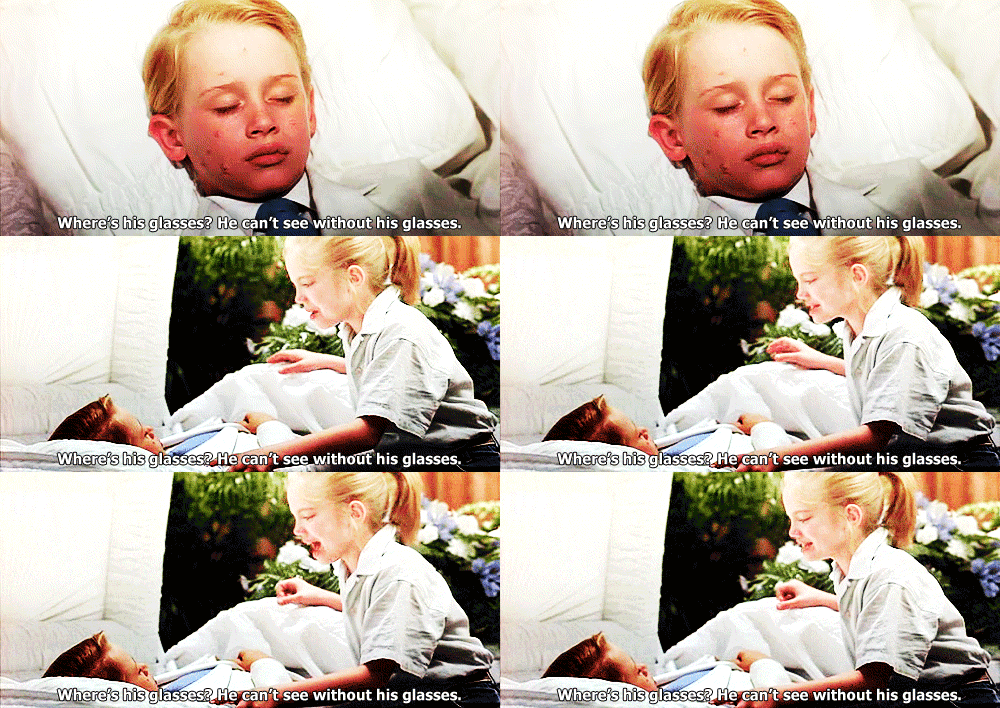
Vada’s best friends with this cute kid with glasses called Thomas J and it’s the cutest friendship EVER IN THE WORLD. And then, he dies and it’s the worst. Seriously, so much sad.


You say that line to anyone my age and I can pretty much bet you: instant teary eyes. SO MUCH SAD.

 
Anyway, My Girl 2 picks up the story 2 years later: Vada’s stepmum is preggers, and Vada’s still really missing Thomas J, and, she’s growing up. She always wanted to be a writer more than anything but now she kind of just wants to be kissed. She heads off to visit her Uncle Phil in LA (we meet him in My Girl) and find out more about her Mum. Which would be the best ever except her tour guide is Uncle Phil’s stepson Nick, and he’s not the best, at all…..

Oh god, doesn’t it just have pre-teen perfection written all over it??

I just, I loved it. I wanted to be Vada, I did. & I remember thinking the whole getting on a plane by yourself and flying all the way to LA sounded like the coolest thing. I thought the whole book, all of it, just sounded so cool and so many million miles away from my own life where there were no super cool dead relatives and no cute boys to hatelove and no scorching hot summers. Plus there’s the fact that I watched my video of My Girl so many times that I felt like I knew Vada, I felt like she was my friend and God, it wasn’t very often that I got to find out what happened to my fave characters after the book had finished or the end credits rolled and suddenly here it was: this look at Vada’s life, post Thomas J. I loved it, I ate it up and I wanted more. I kept wishing and hoping for a My Girl 3 and making up stories in my head of what might have happened. It makes me wonder actually, whether the part of me that’s always had those fangirl tendencies began with My Girl.   


Throwback Thursday: Josephine's Book Edition


I’m sleepy today, so very very sleepy. I’ve woken up at 5.15am every morning for like two weeks and it’s slowly draining me of my very will to live. This is not a lie. I am a person that needs ALL THE SLEEP in order to function and when I don’t get that sleep, well, the results aren’t pretty. Seriously, so very very tired.

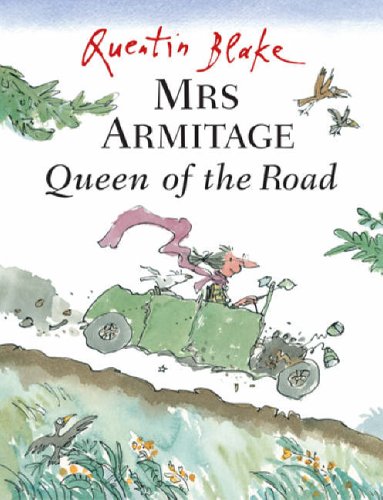
Not too tired though that I can’t talk to you about Mrs Armitage: Queen of the Road which I want to talk to you about because I adore Quentin Blake and because I have a whole lot of love for Mrs. Armitage and her kick ass no nonsense attitude and general utter loopiness, and because I don’t talk often about picture books - which I should because I love them. Loooooove them.

Mrs Armitage is a totally bonkers book, wherein Mrs. A and her dog (Breakspear)  get an old car as a present from Mrs A’s Uncle Cosmo and decide to take it for a drive. Problem is, the old car is falling apart. I say ‘problem’ but it’s not a problem, really because nothing gets in Mrs Armitage’s way, ever – an excellent story then about making the best of things. It’s such a fun book – all the Mrs. Armitage books are so much fun, because Mrs Armitage and Breakspear are fabulous and you never know what’s going to happen next, what else can possibly go wrong you wonder – they bump into bollards and other vehicles and lose the bumper and the doors and even the roof and then this little old lady who wears glasses and stripy pyjama’s winds up making friends with a fizzy pop drinking motorcycle gang (who all think she's most excellent, obviously, because she is.) She’s so eccentric and wonderful and the whole book is just a delight.

It’s the kind of book you can’t not love – I am yet to meet a child, or even an adult, that doesn’t love this book and all that it is. And of course it’s got that trademark Quentin Blake touch.  Oh, Quentin Blake. I’d decorate my whole house with his work if I could. He is my favourite and my best, whether he’s illustrating somebody else words or coming up with a world all of his own, I just, I think he’s kind of a genius.  The story here is a good story in it’s own right, but like with everything else he ever puts his mark on, it becomes so much better next to those illustrations. He just has this knack of capturing the very essence of the story being told and bringing it to life. Seriously, find a copy of this book and grab the nearest small friend or relation and read this book.

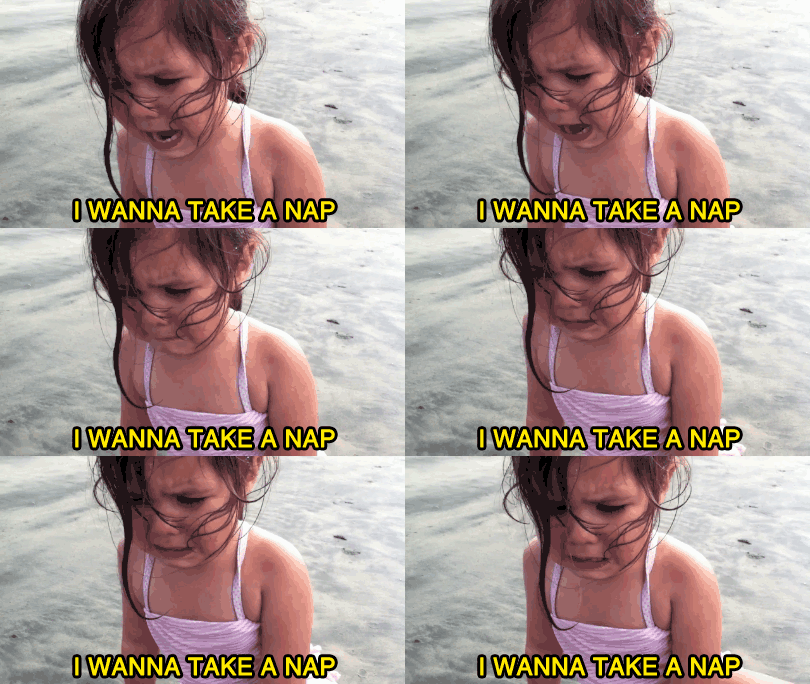
And now, I am going to go and continue to be working and not napping. I WANT TO TAKE A  NAP.


Throwback Thursday: Josephine's Book Edition


Today finds me mostly crazy excited. Crazy excited. CRAZY EXCITED. So excited it seems, that I am totally incapable of any kind of coherent bloggage which…is a problem. (Is bloggage even a word? Nope, it is not.) There’s a reason though, and the reason is Margaret Atwood. I love Margaret Atwood, I mean love. I think she’s my favourite. And, she has a new book coming out in September. It sounds marvellous too; a dystopia where lawful people are imprisoned and the lawless roam free. Nobody does dystopia, or indeed words like Margaret Atwood does and just the news of this book has sent me spiraling. I just, I cannot even. I am SO EXCITED FOR THIS.

It kind of makes choosing a book for Throwback Thursday this week incredibly easy; naturally I’m going to go all Margaret Atwood. 

I could talk about The Blind Assassin because it’s my fave, or I could talk about Handmaid’s or Oryx or The Year of the Flood, but they get talked about a lot a lot; I could even talk about Alias Grace which is the first of hers I ever read so very long ago, but I don’t wanna, basically. 
I feel like spreading just a little bit of love for another of Margaret Atwood’s books that I think is pretty freaking astounding: The Edible Woman. It kind of feels appropriate given news of a new novel to talk about the first one. So, that's what I'm going to do, oh, and if you wondered, my copy looks like this:


Margaret Atwood is an amazing writer – I always find her dystopian works eerily relevant even though they’re set in a future we haven’t reached yet and in the same way The Edible Woman whilst written in the 60’s is still just as relevant today as it ever was then. 
Feminism is a buzz word right now, which is awesome, obviously, and yet at times kind of puzzling. I see a lot of ‘if you think this or do this or don’t do this then you’re really not a feminist, or at least not the right kind’ and an awful lot of instances where feminism has become synonymous with out and out man-hating (although don't get me started on #notallmen) and it all makes my head hurt, because well because of reasons but that is another post for another day, depending on if I decide that feminism and its meaning to me and its many interpretations is a soap box I want to get on. Basically though, when people ask me if I’m a feminist I tend to just think about the definition:


And I say yes, yes I am. Why? Because I am human.
Like I said though, we’ll talk about that another day, for now all you need to know is that I think feminism is incredibly important and I think that this book does an incredible job in addressing it: it’s such a good exploration of society and gender roles, you don’t even know. LET'S TALK ABOUT IT.


Ever since her engagement, the strangest thing has been happening to Marian McAlpin: she can’t eat. First meat. Then eggs, vegeatables, cake, pumpkin seeds – everything! Worse yet she has the crazy feeling that she’s being eaten. Marian ought to feel consumed with passion, but really she just feels…consumed.


So Marian’s just a girl, she’s recently left college has a job and is dating The Perfect Man. Once they get engaged Marian begins to lost sight of herself and starts to have difficulty eating; her relationship with food is tied in directly with her feelings about her impending marriage, and how the sort of forced dependence on Peter makes her feel. It’s pretty clever and so accurate it’s kind of scary. It resonated with me actually, because my relationship with food has a direct correlation with my relationships with the people close to me, and my state of mind.  It’s true isn’t it: people do that, they deal with situations they deem out of their control by controlling what they eat – eating too much, or like Marian starving themselves even though Marian very obviously takes this to it’s extremes. Does that make this an interesting study in eating disorders too, then? Quite possibly, although I kind of feel like Atwood was using Marian’s inability to eat as a metaphor more than a direct ‘she was unhappy so she stopped eating’ but either way, it’s powerful writing.

Relationships can be transforming and that’s the story being told here, one of them at least, and sure, some of it is a little dated – women for example are less likely to be expected to become homemakers now than they were in the 60’s; tell most women now that their place is in the home and holy hell will rein down on you (as it should) but back then, it was just The Way Things Were. People – Marian being the perfect example – caved into societal expectations then much more than they do now and I think it’s interesting how I was frustrated with Marian, how I wanted her to exert some sense of self, some control over her own life, how I wanted her to stop being a doormat and refuse to be moulded by Peter; because for me, the person I am now wouldn’t make the choices Marian made; the society I live in now, whilst so far from perfect is a hell of a lot different to how it was then, when my Granny was my age (and my Granny if you wondered, kicks ass. She’s the most feminist person I know and she rocks it. Probably because she grew up in a world like The Edible Woman and knew it was all kinds of messed up.) Marian did live in that world though, and I guess that makes a lot of things make sense. I wonder, actually, how the book was received when it was released…I suspect it had a bit of an impact.


For an instant she felt them, their identities, almost their substance, pass over her head like a wave. At some time she would be — or no, already she was like that too; she was one of them, her body the same, identical, merged with that other flesh that choked the air in the flowered room with its sweet organic scent; she felt suffocated by this thick sargasso-sea of femininity


This is a short book, but it’s a slow one: it takes a while to get going, which, well the loss of Marian’s identity wasn’t something that happened the second Peter put the ring on her finger so it makes sense for the story to take a while to get going, to make itself known and that right there is another example of Atwood being the best at what she does; the way she tells this story mirrors the story itself. Marian’s loss of identity is slow and not immediately obvious, both to her and to the reader. There’s a lot of other stuff going on, namely in the form of Marian’s two friends both telling totally different tales which keep you just the right amount of distracted as they pull Marian in opposing directions and you finish it, feeling both thrilled at the resolution which is stunning (it’s just a cake…’) and kind of like you just want to sit down and chat about the whole thing because this book, it raises a lot of questions and gives you a lot to mull over and you kind of want to just grab hold of the first person you meet that’s read it and say I thought these things HOW ABOUT YOU? It’s a book that begs for discussion. It should be read in book clubs everywhere (and maybe it is, I don’t even know.)

In addition to all of that stuff, this book is also super duper great because Margaret Atwood knows how to do words. She just does. She does things with words that I don’t understand and don’t know how to explain but that I really really love and even here, in her first novel - that she wrote in her early freaking twenties - that’s still so apparent. I’d hate her for it probably, if I didn’t love her so damn much. & I could keep going, I could keep talking about this book and why I liked it and what it said to me and how nobody does description like Margaret Atwood and how also nobody forces you to really look at the world like Margaret Atwood but my lunch break is over and I have to get back to work.

Read it though, if you haven’t already. I promise it’s excellent.


Throwback Thursday: Josephine's Book Edition


HAPPY WORLD BOOK DAY PEEPS.

Today is making me happy because Twitter and Facebook and the streets I drive down to get to my office have all been full of small children dressed up as their favourite character from a book and I just think that’s kind of excellent. There’s a lot of Roald Dahl around this year, which is excellent and I saw the cutest Mad Hatter this morning, God. The son of a friend of mine has dressed up as Mr Rush and he looks excellent. I’m just loving it a whole lot.

In addition to WBD, this week also seems like Ishiguro week, don’t you think? I get that, that’s a bandwagon I am well and truly on because I have been excited about Ishiguro’s new book The Buried Giant (which was released on Tuesday) for the longest time. Seriously, so excited. SO EXCITED. I also have a copy because my boyfriend is excellent and knows that whilst the way to his heart is for defs through his stomach, the way to mine is through books.

So, let’s Throwback this Thursday shall we? It seems obvious this week, in light of the publication of The Buried Giant to talk about Ishiguro, and if I’m going to talk about Ishiguro then obviously I’m going to talk about Never Let Me Go because that book guys and gals, that freaking book.


Never Let Me Go wasn’t the first of Ishiguro’s that I read – that was When We Were Orphans - ­ ­but it’s absolutely my favourite. In fact, I think I’d even go so far as to say it owns a spot on my list of Top Ten Books of All Time, I loved it that much. It’s also been adapted into a really excellent film – although Ian would tell you differently ‘it’s so fucking bleak Jo, what is wrong with you?’  Which, yep, it is kind of bleak. It’s also kind of amazing. It's the best thing and it's the worst thing and just, it will make you feel all the things. It will.

I first read Never Let Me Go in 2011. It kind of blew my mind, the beauty of it, the careful execution, the use of language, all of it, it just left me sat there once I’d finished it unable to think anything other than ‘wow.’

I try not to use the word ‘perfect’ too often, but I kind of feel a little bit like it wouldn’t be out of place to use it here: I can’t think of a single thing wrong with that book, not one.

It’s so damn clever and so damn good, the charcterisation is spot on, the story is told at just the right pace and in just the right voice, and in the way things are held back and slowly revealed just right when kind of makes you feel like Ishiguro is playing with you a little bit. (Such a tease that guy, I love him.) & it makes you feel, and by ‘feel’ I mean it throws you head first in to a kind of almost suffocating pit of despair.  Yep, this book hurts in the hurtiest of ways.


It’s kind of billed as sci-fi, which, if you’re desperate to box it then science fiction is a label that fits I guess, but more than that its kind of a study of human nature, of ethics and morals and the choices we make. There’s a lot here that will make you think, that will make you look closely at the world as it is today, that will make you study your own self and there’s a really insightful look at love and at loss and at betrayal and forgiveness. Also you know that old adage of ‘show don’t tell’ that I have talked about a lot of times (I did an OU course in creative writing, it stems from that) well, this book is a masterclass in that and it’s so subtle all of the time, so subtle but so powerful. It’s pretty mesmerising actually and once you start it, well you just can’t stop. There’ll be no eating, sleeping, living your actual life for a while, so you know, be prepared for that.

I’m aware there are probably people out there that haven’t read it, which makes me reluctant to write too spoilery a post because, for me at least, a lot of the wonder of this book comes from the not-knowing much more than you get from the blurb. 


Part of the beauty of the whole thing comes from Ishiguro’s slow unravelling, from the things you come to learn as you get deeper and deeper in, that hit you like a smack to the chest and leave you gasping. If I tell you what those things are now, then you’ll likely lose some of that magic. Pretty much all you need to know, really, is that this book is haunting and achingly achingly sad and incredibly beautiful and that it will stay with you, I think, for a long long time. And really, if you haven’t read it then you absolutely should. You should.


I keep thinking about this river somewhere, with the water moving really fast. And these two people in the water, trying to hold onto each other, holding on as hard as they can, but in the end it's just too much. The current's too strong. They've got to let go, drift apart. That's how it is with us. It's a shame, Kath, because we've loved each other all our lives. But in the end, we can't stay together forever


Throwback Thursday: Josephine's Book Edition


We’re going waaaay back in time this Thursday peeps, right back to my childhood when I loved L.M Montgomery more than marmite on toast. Well, almost. I loved her a whole lot anyway.

Growing up, the world that L.M.Montgomery painted in her books was a world I wanted to live in; her characters were people that I wanted to be friends with – I read her books so much that I felt like they were my friends. 
I loved the Emily books, and I loved the Anne books (I think that probably Anne and Gilbert were the first fictional couple I really ever fell for) and I read my copy of Rainbow Valley til the pages fell out. Pretty much most people-who-love books though, are familiar with Emily Starr, and with Anne Shirley so that’s not what I’m here for. What I want to talk about today is The Story Girl which for some reason doesn’t seem to be as well known, and you know, that’s a mystery to me because it’s SO GOOD. Or I mean, I thought it was so good 20-odd years ago. I have to admit I haven’t read it in a while.

The Story Girl is about a group of kids growing up on Prince Edward Island, in the rural type of community that Montgomery wrote so well – it’s one of those kinds of books where there’s a lot going on but not much happens. It’s a book about childhood, and about life and about that one summer. And it’s about The Story Girl:  Sara Stanley, who keeps the rest of the gang entertained with a never ending number of stories. I LOVED Sara when I was little; I kind of wanted to be her to be honest, in the same way that I loved Jo March. I wonder if I’d feel the same way now? (I still love Jo March, FYI…)


In true L.M Montgomery style, the book is charming and touching and paints an idyllic picture of a pretty much perfect summer (those halcyon days though) and each of the children is somebody that you end up liking: observant Beverley – it’s Bev who’s telling us the story, years later when he’s all grown up; sensitive Felix; cocky Dan; beautiful and bossy Felicity; Cecily, the advocate for peace with a stubborn streak; imaginative creative Sara Stanley; the weepy ‘other’ Sara (my least fave I think); and independent Peter, there’s something in them all that appealed to the child that I was, and as in all her books, Montgomery wrote friendship so well. She wrote children so well. They’re not a naughty group, but they’re not goody-goody’s either, and in a story where not much happens, where there’s no beginning-middle-end to speak of, their antics – mischievous and otherwise – drive the story (along with naturally dramatic Sara’s stories, natch.) There’s a bit in the middle that always comes to mind when I think about this book, where the children write their dream books. God, I swear it’s worth a read for that alone, that and the bit where one of the boys thinks that somebody praying for the opposite thing to him will cancel out his prayer. I was genuinely concerned that was a thing when I was small. Aaah, the logic of children. Oh and Sara’s story about how kissing was discovered, or or or, the story about the blue chest.


 "I am sitting on a tragedy," said the Story Girl suddenly”


Isn’t it funny what comes back to you? 
It’s kind of adorable this book, and, I’m sure I read somewhere that The Story Girl was L.M Montgomery’s own favourite so you know, there’s that.

 
The thing about Montgomery I think, not just here, but in all her work, is that she knew how to tell a story. She knew her audience and she understood them and because of that you don’t just like the world she creates, you become hopelessly attached to it.

I guess really, it’s one of those books that transports me back to my own childhood the second I see the cover. It’s for that reason that I almost don’t want to read it again now: what if by doing so it loses some of its magic?

If you’re interested and why would you not be, because surely everybody loves a lovely book, my copy looks like this:

Look at it; it’s so old and wonderful. That’s because it belonged to my Granny: check out the little dedication inside.

 I miss when people used to write in books like this. Which, it’s a weird thing for me to miss because I like books to be perfect. I think it’s the idea of a story telling a story you know? Like, this book isn’t just the story within it’s pages anymore, it’s its own little piece of the past with its own memories and its own stories to tell. I look at this book and I know where it came from and why, and it carries with it a whole other meaning because of that and I just love it. I love that my Granny read this copy, that her name is in it, and that my Mum read this copy, and that then, when I discovered Anne of Green Gables, Granny passed this copy down to me. I’ma keep it (obvs) and hopefully pass it onto my own daughter one day. It kind of feels like more than just a good book, it feels like a little piece of my family history.

Throwback Thursday: Josephine's Book Edition


It’s not the makeup and it’s not the way that you dance and this is like love too where there’s only one dancer who will win your contest that night and they are not particularly the best one”


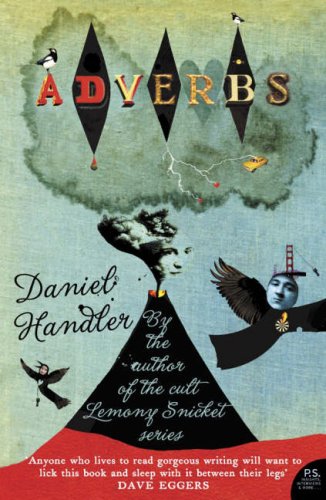
Daniel Handler’s We Are Pirates is released today, did you know, which is super duper extraordinarily exciting. I am VERY excited to get my little hands on a copy of this book and as such it seemed fitting that my Throwback Thursday this week should be Adverbs, which I adore. For some reason this book isn’t on my Goodreads, which suggests I read it before I signed up (May 2009 if you wondered) which makes this a real life throwback. If you’d asked me I would have estimated my having read this around 2009, but it must’ve been the earlier part of that year. Anyway, that’s neither here nor there. What matters, right now, is that I loved it. So much more than I love the Unfortunate Events books that Handler writes as Lemony Snicket (although I do enjoy those, I’m just not fangirling over them like so many others.) Adverbs though. Yep, that’s 2009 me fangirling like a pro.


And when love is over when the diner of love seems closed from the outside you want all those hours back along with anything you left at the lover’s house and maybe a couple of things which aren’t technically yours on the grounds that you wasted a portion of your life and those hours have all gone southside.


Adverbs is excellent. It’s somehow both novel and short story collection, with each chapter (story?) having a different adverb as a title, all focusing on love. It’s a love story. It’s full of characters all wonderful and puzzling and endearing and of stories that are the same. It explores love and loss, humour and anger and it does so in a way that I don’t think I’ve ever seen before. It’s the kind of book that makes you love words and love writing and just love. It’s the kind of book that makes your face do the happy thing because it’s kind of remarkable and you don’t come across something remarkable all that often and GOD I cannot believe, actually, that I haven’t talked about it before. Writing this is making me want to read it all over again (and my copy has a pretty cover too, which helps.)


So she loved him. She just did immediately and again often and clearly naturally and soundly and obviously and many others


It’s probably not the easiest book to read, thinking about it, because you’ve got recurring characters but no obvious narrative (but a distinct ability to make the ordinary seem extraordinary) and Handler is all meandering sentences and disjointed thoughts and repetition, but that works for me: I am a fan, actually, of the run-on sentence, of the way it makes you feel like the writer is talking to you rather than trying to write to any set rules. (It’s a good job I am a fan actually, because oftentimes I look at my own writing and think ‘holy run on sentence, batman.’)


They looked at each other like a pair of parentheses.


Adverbs is a gem of a book, it proves in it’s own inimitable way that love really is a verb, that it can be found in a million different places and takes many forms: romantic, platonic, familial, each as precious, as joyful and as painful as the last.  It kind of feels like if you’ve loved or been loved then this book was written for you. I liked it a whole whole lot.


The clock in his car hadn't adjusted to daylight saving time yet and said it was four-fifteen when it was really five-fifteen. Peter probably didn't have time to fiddle with it, or it was tricky, as car clocks are. I didn't mind. You can't mind these things, you just can't, for to dislike what makes a person human is to dislike all humans, or at least other people who can't work clocks. You have to love the whole person, if you are truly in love. If you are going to take a lifelong journey with somebody, you can't mind if the other person believes they are leaving for that journey an hour earlier than you, as long as truly, in the real world, you are both leaving at exactly the same time.